Echoes of the Forgotten Realm: Why Elden Ring Continues to Dominate Modern Open World Gaming
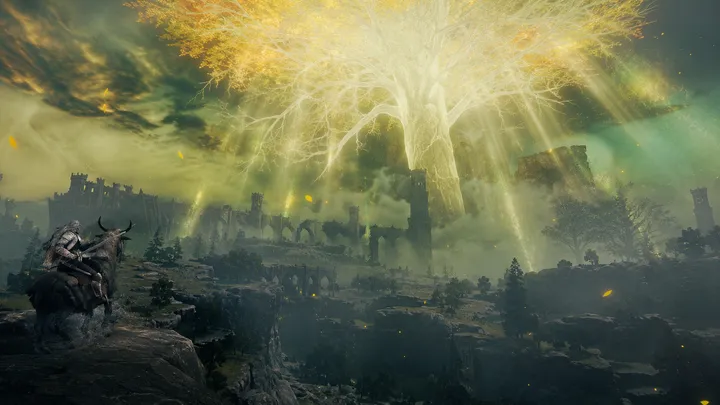
In the ever evolving landscape of modern gaming very few titles manage to redefine an entire genre while simultaneously capturing the imagination of millions of players worldwide. Elden Ring accomplished exactly that. Developed through the collaboration between FromSoftware and fantasy author George R R Martin the game emerged not merely as another action RPG but as a monumental transformation of open world design combat philosophy and player freedom.
What makes Elden Ring extraordinary is not simply its difficulty or its vast map filled with terrifying enemies. Instead the game succeeds because it creates an emotional sense of discovery rarely found in modern gaming. Every ruined castle every hidden catacomb every mysterious forest and every towering demigod contributes to a world that feels alive ancient and dangerous. The Lands Between are not designed to guide players comfortably from one objective to another. They are built to challenge curiosity itself.
Unlike traditional open world games where maps become cluttered with repetitive icons Elden Ring trusts players to explore organically. This design philosophy transformed the way players engage with exploration and progression. Rather than following a checklist players venture into uncertainty where rewards often emerge from persistence experimentation and bravery.
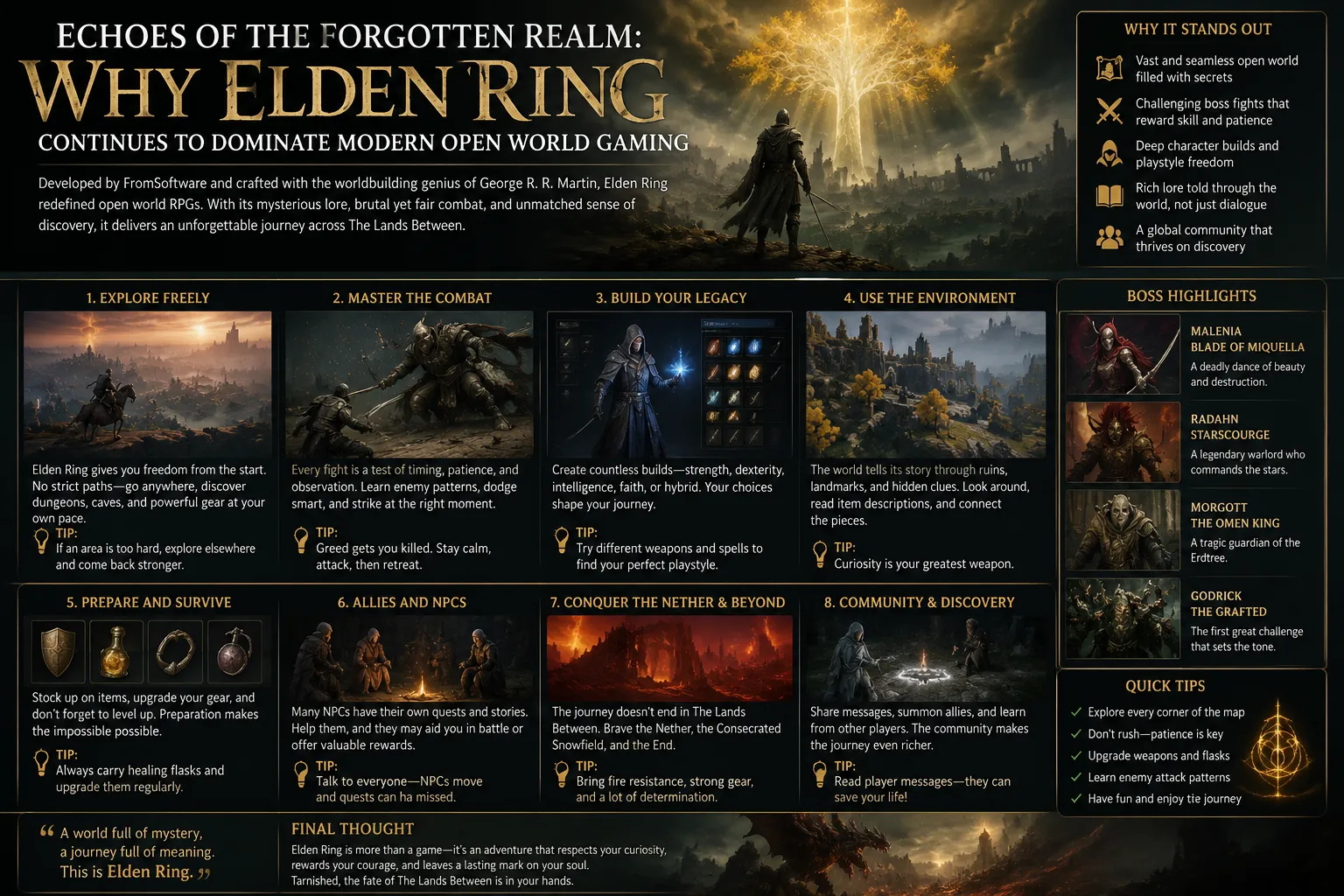
The Arrival of a New Open World Philosophy
Before Elden Ring many open world games relied heavily on familiar formulas. Towers revealed map icons quests were carefully marked and progression often followed predictable structures. Elden Ring disrupted these conventions by embracing ambiguity and environmental storytelling. Players are rarely told exactly where to go. Instead subtle visual cues enemy strength and environmental design guide exploration naturally.
This approach created a powerful sense of immersion. Discovering a hidden underground civilization or stumbling upon an optional dragon encounter feels meaningful precisely because the game never announces these moments directly. Exploration becomes personal rather than mechanical.
The Freedom to Wander
One of the most revolutionary aspects of Elden Ring is the freedom it grants players immediately after the opening area. Instead of restricting progression behind invisible barriers the game encourages experimentation. If one region becomes too difficult players can travel elsewhere discovering new weapons spells and secrets before returning stronger.
This non linear structure dramatically reduces frustration while preserving challenge. Players never feel permanently trapped because the world itself becomes part of the progression system.
Most Important Elements of Exploration
- Organic world discovery
- Non linear progression
- Hidden dungeons and bosses
- Environmental storytelling
- Rewarding curiosity
The Combat System That Rewards Patience and Precision
Combat in Elden Ring represents the culmination of years of FromSoftware design evolution. Every battle whether against ordinary soldiers or gigantic demigods demands observation timing and discipline. Button mashing almost always leads to failure.
Unlike many action games where victory depends purely on statistics Elden Ring emphasizes mechanical mastery. Dodging too early blocking carelessly or attacking greedily can instantly shift battles against the player. This creates tension during nearly every encounter.
Why Boss Battles Feel Legendary
The boss encounters in Elden Ring became some of the most discussed moments in gaming culture. Characters like Malenia Radahn and Morgott are not simply difficult enemies. They are cinematic experiences combining visual storytelling emotional music and layered combat mechanics.
Each boss teaches unique lessons. Some punish panic rolling while others force players to control spacing carefully. Overcoming these challenges creates satisfaction that feels genuinely earned rather than artificially granted.
Most Memorable Boss Design Elements
- Multi phase encounters
- Environmental storytelling
- Distinct combat personalities
- Large scale cinematic arenas
- Dynamic music progression
The Atmospheric World Building of The Lands Between
The visual identity of Elden Ring remains one of its greatest achievements. Every region possesses distinct architecture colors enemy factions and environmental themes. From the golden plains of Limgrave to the crimson horrors of Caelid the game constantly introduces fresh visual experiences.
Importantly these environments are not merely decorative. They communicate lore history and emotional tone without relying heavily on exposition. Broken statues abandoned battlefields and corrupted wildlife all contribute to the feeling that players are exploring a civilization shattered by divine conflict.
Environmental Storytelling Without Excessive Dialogue
Many modern RPGs rely heavily on long cinematic sequences and constant dialogue. Elden Ring often communicates its narrative silently through atmosphere item descriptions and environmental clues.
This storytelling method encourages community discussion because players piece together lore collaboratively. Entire online communities emerged dedicated to interpreting hidden meanings and character histories.
The Evolution of Character Builds and Player Creativity
One of the reasons Elden Ring maintains long term replayability is its enormous build diversity. Players can create agile dexterity warriors devastating spellcasters colossal strength builds or hybrid combinations blending magic and melee combat.
This flexibility ensures that nearly every playstyle feels viable. The game encourages experimentation rather than forcing narrow progression paths.
Build Diversity Creates Replayability
A player completing the game as a heavily armored knight experiences combat entirely differently from someone using blood magic or stealth assassinations. Weapons skills spells and talismans dramatically alter gameplay rhythm.
Because of this many players completed multiple playthroughs exploring entirely different combat identities.
Popular Build Archetypes
- Strength colossal weapon builds
- Dexterity bleed builds
- Intelligence sorcery builds
- Faith holy magic builds
- Hybrid battlemage characters
The Social Phenomenon Surrounding Elden Ring
Elden Ring became far more than a successful game release. It evolved into a cultural gaming event. Social media platforms became flooded with boss reactions hidden discoveries lore theories and challenge runs.
Unlike competitive multiplayer games where communities often divide around rankings Elden Ring created shared experiences centered around discovery and perseverance.
The Rise of Community Exploration
Players collectively uncovered hidden questlines secret endings and obscure mechanics over months. Some hidden interactions remained undiscovered for long periods creating ongoing excitement even after release.
This communal exploration transformed the game into a constantly evolving conversation rather than a one time experience.
The Role of Difficulty in Player Satisfaction
One of the most debated aspects of Elden Ring remains its difficulty. Critics argued that the game could intimidate newcomers while fans praised its refusal to compromise challenge.
However the true brilliance of Elden Ring lies in how it balances difficulty with player freedom. Unlike previous FromSoftware titles players can explore elsewhere summon allies or experiment with builds when facing obstacles.
Challenge Without Artificial Punishment
Difficult encounters feel fair because the game provides tools for adaptation. Defeat usually teaches valuable lessons rather than feeling arbitrary.
This design philosophy transforms frustration into determination. Every failure contributes to eventual mastery.
How Elden Ring Softens Difficulty
- Open world exploration options
- Spirit summon companions
- Flexible leveling systems
- Extensive equipment variety
- Optional cooperative multiplayer
The Soundtrack That Amplifies Emotional Weight
Music in Elden Ring plays a crucial role in shaping emotional intensity. Quiet exploration segments often feature subtle atmospheric audio while boss battles erupt into massive orchestral compositions.
The soundtrack enhances the scale of encounters making victories feel legendary and defeats emotionally devastating.
Boss Themes as Narrative Tools
Certain boss themes communicate tragedy power or madness more effectively than dialogue could. The music becomes part of the storytelling structure itself.
Combined with visual design these themes create unforgettable emotional experiences.
The Lasting Impact on Modern Game Design
Following Elden Ring many developers began reconsidering how open world games should guide players. The success of minimal hand holding demonstrated that audiences still crave mystery exploration and meaningful challenge.
The game proved that modern players do not always require constant objectives tutorials and map markers to remain engaged.
A Shift Away From Formulaic Design
Elden Ring encouraged greater trust between developers and players. Rather than designing around convenience alone the game embraced uncertainty and curiosity.
This influence already appears across newer titles attempting to create more organic exploration systems.
The Emotional Journey of Player Progression
Beyond mechanics visuals and difficulty Elden Ring succeeds because it creates emotional transformation. Players begin vulnerable confused and frequently overwhelmed.
Gradually through persistence experimentation and hard earned victories players gain confidence mastery and understanding of the world around them.
Why Victory Feels Meaningful
Modern games often provide rapid gratification through constant rewards. Elden Ring instead builds satisfaction slowly. Success feels powerful precisely because failure remains possible.
This emotional progression creates memories that remain with players long after completion.
The Future Legacy of Elden Ring
Years from now Elden Ring will likely be remembered not simply as a successful RPG but as a transformative moment in gaming history. It demonstrated that ambitious world design meaningful exploration and uncompising artistic vision can still dominate the industry.
Its influence extends beyond gameplay mechanics. Elden Ring reminded players why mystery wonder and challenge remain essential to interactive storytelling.
The Beginning of a New Era
Whether future developers fully adopt its philosophies or merely draw inspiration from them Elden Ring permanently altered expectations surrounding open world design.
The Lands Between may be fictional but the emotional journey players experienced within them became very real.
In an industry increasingly focused on accessibility speed and convenience Elden Ring proved that players still crave worlds capable of demanding patience curiosity and resilience. Few games achieve technical excellence. Even fewer become cultural landmarks. Elden Ring accomplished both simultaneously cementing itself as one of the defining games of modern gaming history.