






Introduction
Grounded 2 expands the survival experience by introducing deeper creature behavior, more interconnected systems, and a progression loop that rewards careful planning. While the game appears simple at first glance—gather, craft, survive—it hides layers of complexity that only reveal themselves through extended play. Success in Grounded 2 requires understanding the world’s rhythm, mastering its ecosystem, and developing strategies that evolve with every in-game day.
This guide explains how to play Grounded 2 effectively through ten chronological sections, each addressing a strategic stage of the game. Instead of giving surface-level tips, the guide explores the logic, timing, and reasoning behind every major survival decision.
- Learning the world during the first in-game days
- The first hours of Grounded 2 determine your long-term momentum. Many players rush to craft armor and weapons, but the real priority is learning the map’s early patterns. Creature routes, safe pockets, water sources, and respawn points form the foundation of your survival. The area near the starting point offers predictable resources such as fiber, sap, pebbles, and dew, allowing beginners to develop route consistency.
During this stage, experienced players avoid unnecessary combat. Most early threats—from lawn mites to worker ants—can drain precious healing items if approached recklessly. Instead, the player should focus on building simple routines: collecting dew during morning cycles, farming sap from roots, and memorizing the layout of small landmarks.
Understanding these early systems makes the difference between comfortable progression and a chaotic, resource-starved start.
- Establishing stable hydration and food routines
- Hydration is the first true barrier for beginners. Dew appears at dawn and evaporates quickly, forcing players to move fast. Efficient players learn dew spawn zones, such as leaf clusters or webbed areas, then create morning loops to secure water before tackling other tasks.
- Food management grows easier once the player recognizes consistent sources. Mushrooms offer a safe, renewable baseline. Likewise, gnats and aphids provide quick meat. However, experienced players avoid overcooking meat because cooked food spoils quickly in Grounded 2.
A stable diet also depends on energy management. Certain foods grant stamina benefits or reduce thirst decay, making them ideal for exploration phases. Once the player builds predictable morning and afternoon food cycles, the rest of the day becomes available for crafting and exploration.
- Crafting early tools and learning combat rhythm
- Many new players craft weapons without understanding the game’s stagger and stamina system, leading to messy fights. Grounded 2 combat revolves around timing, spacing, and enemy patterns. Light weapons allow rapid movement but deal lower damage, while heavy weapons apply staggering force but require careful stamina control.
- It is crucial to practice with weaker enemies first. Fighting mites or aphids allows the player to understand reaction time, perfect blocks, and recovery windows. Instead of rushing to craft the strongest early weapon, the player should pick one that complements their movement style.
Tool crafting also matters. Axes, spears, and hammers unlock new resource types, and each upgrade expands recipe possibilities. Efficient players craft tools in a specific order to unlock early armor, glider options, and building materials that accelerate base development.
- Choosing the right location for your first base
- The first base should not be a long-term home. It should serve as a safe place for storing materials, crafting early upgrades, and defending against minor threats. The ideal early base location is near:
- • Water sources
- • Mushrooms or other food clusters
- • Sap deposits
- • Low-threat patrol routes
- Avoid placing your base near fire ant trails, termite patrols, or spider nests, as early-game defenses cannot handle surprise attacks.
Some players build above ground to avoid ground-based threats, using branches, roots, or small stone ledges as platforms. Others prefer hidden pockets behind large objects. The key is selecting a location that demands minimal defense while offering easy access to materials you need daily.
- Expanding exploration into mid-tier zones
- After stabilizing your early routine, the next challenge is exploring three major terrain types: dry grasslands, moist lowlands, and debris fields. Each zone presents new enemies, new materials, and higher risks.
- Dry grasslands offer brittle materials but host aggressive creatures like ants and larva. Moist lowlands contain grubs, clay deposits, and unique plants valuable for mid-tier crafting. Debris zones, though resource-rich, introduce environmental hazards such as sharp objects, sticky surfaces, and insect nests.
Exploration requires preparation. Before entering a new zone, players should:
• Strengthen armor to at least tier 1.5
• Craft a reliable ranged weapon
• Carry sap bandages or healing smoothies
• Store extra food to avoid interruption
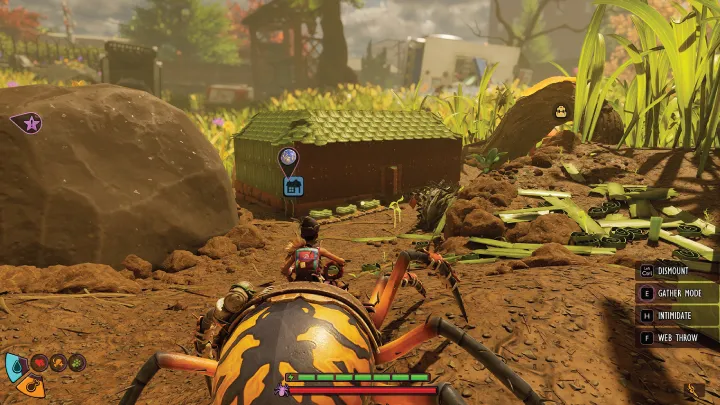 Mid-game exploration is where Grounded 2 begins to open up, and each biome teaches a different set of survival skills.
- Mastering creature behavior and patrol patterns
- Grounded 2 creatures follow dynamic patterns influenced by time of day, hunger cycles, and territory pressure. Understanding these patterns becomes essential for safe travel. Certain insects sleep at night, while others become active. Some creatures hunt during dusk, while others retreat into their nests.
- Players must learn these rhythms. For example:
- • Spiders often wander at night
- • Fire ants patrol aggressively during daylight
- • Ladybugs maintain predictable herb-gathering loops
- • Mosquitoes shift toward water-rich areas depending on weather
- Recognizing these patterns allows safe passage through dangerous zones. Experienced players rarely fight creatures unnecessarily—they avoid patrols, use elevation, or slip past during low-activity windows.
- Upgrading equipment and unlocking specialized builds
- Grounded 2 introduces deeper customization through armor sets, weapon upgrade paths, and special modifiers. Each build suits a different playstyle. Heavy armor suits tanking and perfect block play, while light armor benefits fast movement and ranged combat.
- Crafting choices matter greatly. Upgrading the wrong weapon early can drain valuable materials. Players should focus on versatile weapons—spears, clubs, bows—before committing to advanced gear that requires rare components.
Specialization becomes crucial at this stage. Players can create builds focused on:
• Stamina regeneration
• Poison damage
• Slow effects
• Ranged burst damage
• Shield-based defense
The right build makes high-threat areas significantly more manageable.
- Navigating late-game biomes and hazards
- Late-game zones are less about brute force and more about environmental awareness. Hazardous areas include toxic puddles, extreme heights, sticky zones, or nests that spawn enemies endlessly. Mastery involves carrying the right consumables and understanding terrain flow.
- Players should use elevation, gliders, and zipline shortcuts to avoid direct conflicts. Many late-game enemies have long aggro ranges, requiring stealthy approaches or distraction tools. Falling, drowning, or getting trapped can be more dangerous than combat.
The best survivors memorize:
• Safe return paths
• Emergency shelter points
• Water sources during long expeditions
• Resource clusters that reset often
Late-game exploration turns the backyard into a strategic puzzle.
- Managing large-scale crafting and base expansion
- Once progression stabilizes, players begin constructing large bases. These structures serve as crafting hubs, safe zones, and storage facilities. To build effectively, players must balance aesthetics with practicality.
- A good late-game base includes:
- • Elevated platforms to avoid raids
- • Multiple entrances and escape routes
- • Designated crafting rooms
- • Large storage systems
- • Lighting and path markers
- Large structures also attract attention. Players must fortify walls, position traps, and consider creature patrols when designing. Efficient base layout reduces travel time, increases crafting speed, and improves survival consistency.
- Preparing for endgame content and mastering full survival loops
- Endgame content challenges the player to use everything learned so far. Boss fights, deep nests, and dangerous patrol zones demand advanced combat mastery, situational awareness, and full resource preparation.
- The player must enter endgame with:
- • Tier 3 armor
- • Multiple specialized weapons
- • Stamina and healing consumables
- • Backup materials for repairs
- • Full understanding of creature patterns
- True mastery comes from linking all survival systems together—hydration routes, food routines, base networks, glider paths, zipline highways, and battle strategies. Players who reach this point turn Grounded 2 from a survival challenge into a controlled ecosystem they can navigate with confidence.
Conclusion
Learning how to play Grounded 2 effectively involves understanding far more than crafting recipes and combat moves. It requires a deep appreciation for the world’s timing, creature behavior, environmental hazards, and resource cycles. By mastering the game step by step—early routines, mid-game exploration, late-game specialization, and endgame planning—players develop a full survival loop that transforms the daunting backyard into a manageable, predictable home.