ntroduction
Grounded 2 expands the miniature backyard environment into a living ecosystem full of shifting alliances, predator patterns, and territorial pressures. One of the most fascinating and impactful systems in the game is the slow-burning war between black ants and termites. Though the player is never told directly about this conflict, its consequences shape resource availability, danger levels, base construction strategies, and even long-term world balance.
This article explores that conflict in depth using ten numbered sections arranged by time and meaning, following the full lifecycle of the war and how it affects the player’s survival experience.
- Early signs of an emerging rivalry
- In the first days of a new playthrough, the player may notice black ants roaming farther than expected from their hill. These scouts wander near the dry grass zone, an area quietly patrolled by termites. At this stage no direct conflict happens, but both groups display an unusual level of alertness.
This behavior is not random. Grounded 2 uses a territory pressure system—when two species’ patrols repeatedly overlap, hostility rises. The early overlap between black ants and termites is the first signal of a rivalry forming between them, even though the player sees only normal wandering insects.
Over time these encounters become more frequent, and the tension between the two species gradually builds.
- First clashes and predictable hotspots
- Once pressure crosses the threshold, the first actual battles begin. These skirmishes consistently happen at choke points such as the fallen plank passage, the cracked stone gap, and the dry root arch. These natural funnels force both species into contact.
The early battles follow a clear pattern. A scout encounters a patrol, reinforcements arrive, and a brief, violent fight takes place. The player, if nearby, can collect remains—free ant parts, termite bits, and other materials that would normally require dangerous fights.
These predictable hotspots become important farming areas, but they also warn players that the conflict is escalating.
- Changes in resource flow
- As the two factions devote more soldiers to defense and raids, the overall supply of materials shifts across the backyard. Black ants reduce worker activity, limiting food transport and tunnel expansion. Termites decrease resin harvesting to protect their nest entrances.
This results in clear consequences:
• Ant parts become harder to farm directly
• Resin availability drops temporarily
• Battlefields become the most reliable source of materials
• Some crafting routines must be delayed due to scarcity
This stage marks the first time the player truly feels the impact of the ant–termite conflict on progression.
- Escalation into open warfare
- By the time the player reaches mid-tier armor and weapons, the conflict enters its most explosive phase. Large raid groups march across the backyard in waves.
The first wave features black ants pushing deep into termite territory, hoping to break outer defenses. The termites respond with heavy units positioned in layers to slow the advance.
The second wave reverses the flow, with termites launching counter-surges to reclaim contested routes. These clashes often erupt in areas the player previously thought safe, forcing constant repositioning and planning.
This is the most dangerous and dynamic period of the war.
- Base building challenges
- With war raging across multiple paths, base builders may suddenly find their home surrounded by chaos. A safe location during early game can become a warfront after the conflict intensifies.
Players commonly face:
• Stray soldiers attacking structures
• Patrols colliding near their base
• High noise levels disrupting work
• Increased risk during nighttime crafting or cooking
• Repeated aggro issues from insects chasing each other
This teaches players an important lesson: base placement in Grounded 2 must consider long-term movement patterns, not just early convenience.
- Player strategies to exploit the war
- Although risky, the war opens major opportunities for skilled players. By using sound, movement, or clever positioning, players can influence where black ants and termites collide.
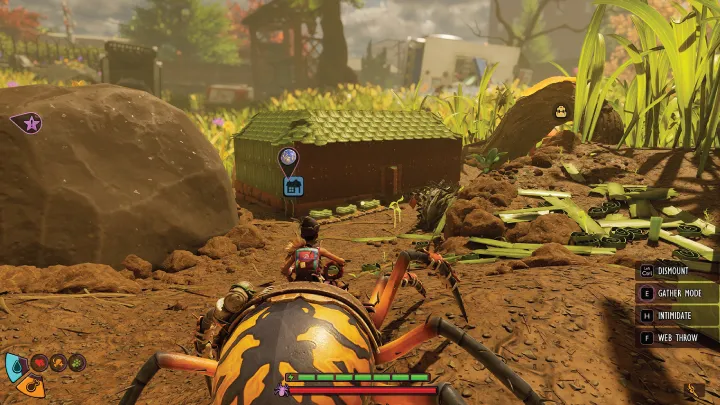
Common strategies include:
• Luring a termite patrol into an incoming ant raid
• Letting the two factions weaken each other before engaging
• Farming battlefield loot for fast material gain
• Sneaking into nests while defenders are distracted
• Redirecting patrols by clearing or blocking small paths
When used well, the war becomes a tool that accelerates progress.
- Long-term ecosystem shifts
- Grounded 2 tracks population momentum. If one species loses repeatedly, its numbers drop. If it wins consistently, it expands.
Possible long-term results include:
• Black ant worker collapse, reducing ant materials for days
• Termites expanding tunnels, altering map layout
• Changes in patrol patterns that remain for the entire playthrough
• Resource hotspots moving or disappearing
The player therefore has indirect control over long-term ecology through simple actions such as hunting or clearing routes.
- Period of temporary stabilization
- After enough battles, the two species reach a new equilibrium. Patrol lines settle, skirmishes slow down, and the backyard becomes less chaotic. This is the best time for late-game base expansion and stable resource gathering.
However, stabilization does not equal peace. If the player tilts the balance—for example by raiding a nest—another round of conflict may erupt. Late-game players must understand that even tiny actions can destabilize the ecosystem again.
This phase gives breathing room but keeps the world reactive and alive.
- How the player unknowingly shapes the war
- Even without intending to, the player affects the balance of power. Killing too many termite soldiers allows black ants to dominate. Over-farming ant workers weakens the colony, letting termites push outward.
Even building structures influences movement:
• Bridges alter patrol routes
• Walls block natural lines
• Torches attract or repel certain insects
• Cleared grass creates new pathways
The war is not separate from the player. It evolves based on the player’s presence in the world.
- Final stage of the conflict
- As the world reaches late game, the war’s final form depends entirely on what has happened earlier. In some playthroughs, black ants hold strong, maintaining a wide border. In others, termites dominate and expand, shifting the entire balance of the central backyard.
This creates a replay-friendly ecosystem where each run feels different. Players who understand the war’s stages can shape the outcome to benefit their crafting routes, exploration patterns, and boss preparation.
The war is both background lore and a core gameplay system.
Conclusion
The war between black ants and termites is one of the most complex and influential systems in Grounded 2. It shapes resource flow, danger zones, patrol routes, and the internal rhythm of survival. By understanding its timeline—from early signs through full war to stabilization—players gain deeper control over the world and their progression. This silent conflict reveals how Grounded 2 transforms its backyard into a living ecosystem where every creature action, including the player’s, affects the future of the world.