.webp)








Introduction
Wildfrost is a tactical roguelike deck-building game that blends strategic card combat, team management, and unpredictable progression into a highly replayable adventure. Set in a frozen world where an endless winter has consumed civilization, players lead a group of companions through dangerous encounters in an attempt to defeat the mysterious Wildfrost. Every run presents new challenges, requiring players to adapt their strategies based on available cards, companions, charms, and events.
Unlike many deck-building games that focus solely on powerful card combinations, Wildfrost emphasizes positioning, countdown management, and synergy between companions. Victory depends on making smart decisions both inside and outside of combat. Even a powerful deck can fail if units are placed incorrectly or abilities are activated at the wrong time.
Many beginners struggle because they add too many cards, ignore companion synergy, or underestimate enemy attack timers. This guide covers everything from your first expedition to advanced strategies for consistently clearing the toughest runs.
1. Keep Your Deck Small and Consistent
One of the most common mistakes in Wildfrost is taking every card reward after battles.
While collecting more cards may seem beneficial, an oversized deck becomes inconsistent and makes it harder to draw your strongest combinations.
Instead, focus on maintaining a compact deck filled with useful cards.
Benefits of a Small Deck
- Draw important cards more often.
- Build reliable combos.
- Reduce weak draws.
- Improve overall consistency.
Cards to Avoid
- Situational cards with limited value.
- Expensive cards that rarely get played.
- Duplicate effects without synergy.
A streamlined deck is usually stronger than a large collection of average cards.
2. Understand the Countdown System
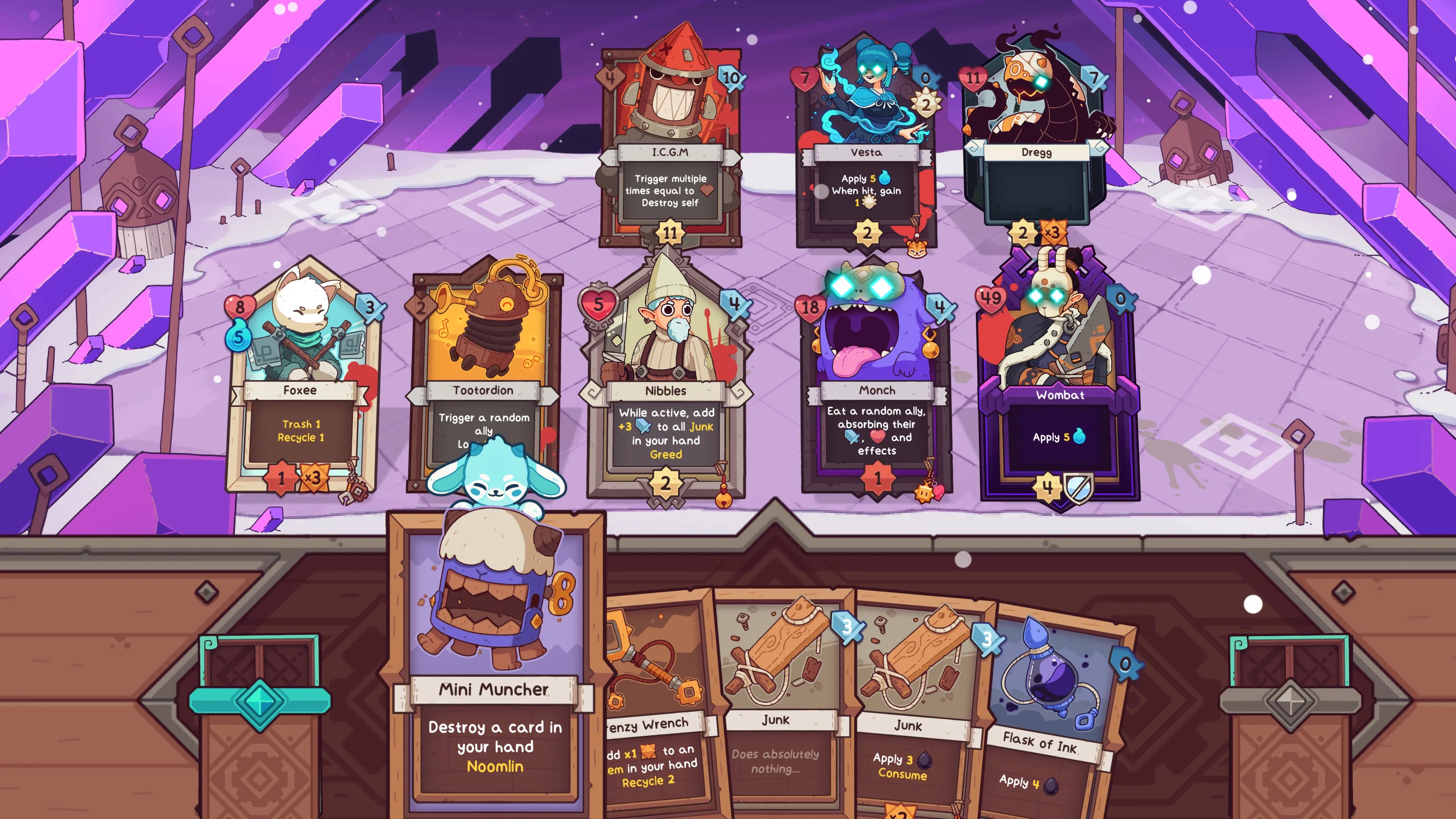
Wildfrost's combat revolves around countdown timers rather than traditional turns.
Every companion and enemy attacks after their countdown reaches zero.
Many beginners pay attention only to their own units while ignoring enemy timers.
Important Combat Priorities
- Watch enemy countdowns.
- Plan several turns ahead.
- Delay dangerous attacks.
- Protect vulnerable companions.
Why Timing Matters
Proper countdown management often prevents more damage than simply increasing your offense.
Learning enemy attack patterns dramatically improves survival.
3. Build Around Your Leader
Your Leader is the foundation of every run.
Each leader begins with different statistics and unique traits that influence your overall strategy.
Many players ignore their leader's strengths and build generic decks.
Leader Types
- High Attack
- High Health
- Balanced
- Utility-focused
Build Strategy
Choose cards and companions that complement your leader rather than trying to compensate for every weakness.
Strong synergy consistently outperforms random powerful cards.
4. Position Your Team Carefully
Positioning is one of Wildfrost's defining mechanics.
Unlike many deck-builders, unit placement directly affects combat outcomes.
Moving a single companion can completely change a battle.
Positioning Tips
- Place tanks in front.
- Protect support units.
- Keep damage dealers safe.
- Anticipate enemy targeting.
Common Mistakes
- Leaving support units exposed.
- Ignoring row positioning.
- Blocking important attacks.
- Forgetting movement abilities.
Smart positioning wins many battles before cards are even played.
5. Use Charms Wisely
Charms permanently enhance cards and companions during a run.
Choosing the right target for a powerful Charm can dramatically increase your chances of success.
Many beginners spread Charms across multiple average cards instead of strengthening core cards.
Best Charm Targets
- Frequently played cards.
- Strong companions.
- Reliable utility cards.
- Key damage dealers.
Why Charms Matter
A single upgraded card can influence every battle throughout the remainder of a run.
Invest carefully rather than randomly.
6. Recruit Companions That Work Together
Companions are far more effective when their abilities complement each other.
Many new players recruit companions based solely on individual strength.
Team synergy is significantly more important.
Valuable Team Roles
- Tank
- Damage Dealer
- Support
- Status Specialist
Synergy Examples
Buff-Based Teams
Increase attack power across multiple companions.
Status Teams
Apply effects like Frost, Poison, or Shell consistently.
Summon Strategies
Overwhelm enemies with additional units.
Building around a shared strategy produces much stronger results.

7. Learn Enemy Mechanics
Every enemy type has predictable behaviors.
Players who understand enemy mechanics can prepare for dangerous attacks before they happen.
Enemy Behaviors to Watch
- Multi-target attacks.
- Status effects.
- Summoning reinforcements.
- High-damage abilities.
Preparation Tips
Study Attack Timers
Know exactly when major attacks occur.
Eliminate Priority Targets
Support enemies often create larger problems than frontline attackers.
Save Powerful Cards
Don't waste your strongest abilities on weak enemies.
Knowledge often provides a greater advantage than stronger cards.
8. Spend Resources Strategically
Throughout each run, you'll encounter merchants, events, and opportunities to improve your deck.
Many beginners spend resources immediately without considering future needs.
Good Investments
- Card removal
- Powerful Charms
- Strong companions
- Deck upgrades
Avoid
- Weak card purchases.
- Redundant upgrades.
- Expensive low-impact items.
Every purchase should strengthen your primary strategy.
9. Prepare for Boss Battles
Bosses represent the biggest challenge in every run.
Unlike regular encounters, bosses often introduce multiple mechanics that punish poor planning.
Many players reach bosses with unfocused decks that struggle against complex encounters.
Before Fighting a Boss
- Remove weak cards.
- Upgrade core companions.
- Heal whenever possible.
- Organize your strategy.
Boss Preparation Checklist
- Strong frontline
- Reliable damage
- Defensive options
- Card consistency
Boss victories usually depend more on preparation than luck.
10. Optimize for High-Difficulty Runs
As you become more experienced, higher challenge levels require increasingly efficient play.
Small mistakes become much more costly.
Endgame Priorities
- Perfect deck consistency.
- Strong companion synergy.
- Efficient resource management.
- Careful route planning.
- Advanced positioning.
Advanced Tips
Skip Weak Rewards
Not every reward improves your deck.
Plan Several Battles Ahead
Think about future encounters before making decisions.
Build Around One Strategy
Focused decks outperform unfocused collections of powerful cards.
Learn From Failed Runs
Every defeat reveals weaknesses that can improve future attempts.
Consistency is the key to mastering Wildfrost.
Conclusion
Wildfrost offers a refreshing blend of deck-building, tactical positioning, countdown management, and companion synergy that rewards thoughtful decision-making over random luck. While each run presents different cards and opportunities, success comes from maintaining a focused strategy, building efficient decks, and understanding how your companions interact with one another.
By keeping your deck small, managing countdown timers carefully, positioning companions effectively, investing wisely in Charms, and preparing thoroughly for boss encounters, you'll steadily improve your performance across every expedition. Whether you're aiming to defeat the Wildfrost for the first time or conquer the game's highest difficulty levels, these strategies will provide the foundation for consistent success.